


Data Minimization and Retention: Principles, Risks & Compliance
Learn how data minimization and retention improve governance, reduce risk, and meet privacy laws like GDPR, CCPA, HIPAA, and GLBA.

Bill Schaumann
Table of Contents
- Why Data Minimization and Retention Matter for Privacy Compliance
- Implementing Data Minimization for GDPR and CCPA Compliance
- Creating an Effective Data Retention Policy for Privacy Regulations
- Automated Data Retention and Monitoring with LightBeam
- Strengthen Data Governance with Minimization and Retention Best Practices
- ❓ Frequently Asked Questions (FAQ)
Why Data Minimization and Retention Matter for Privacy Compliance
Minimization and Retention are two foundational privacy principles that have been part of data protection frameworks since the beginning of the information age. The Organisation for Economic Co-operation and Development (OECD) Privacy Guidelines, first issued in 1980, were the first internationally recognized privacy framework to explicitly include data minimization and retention limitations as core principles. By managing personal information with these two principles in mind, organizations can streamline business processes, reduce costs, and address risks of breach while meeting several regulatory obligations. Combined, these principles aspire to;
“Collect only the data that is needed, and keep it for only as long as it is needed.”
The ideas behind the minimization and retention principles can sometimes seem to go against old common sense information technology thinking of “I don’t know what data I need, so give me all of it” or “I might need this in the future, so I am keeping it just in case.” Over time, this thinking has led to organizations building mountains of old, stale, and unmanageable data. By understanding the specific data needs of a business process and managing its long-term use, a more focused and accurate data collection effort can be implemented. Governing with these principles in mind reduces the amount of information collected, stored, and processed, and reduces the risks of storing old data.
Storing expired data can lead to:
- Mishandling of data
- Increasing the risk of breach
- Slowing systems and complicating analytics
- Increasing storage costs
- Creating larger attack surface vulnerabilities
- Damaging the brand and company reputation
By collecting only the data as needed for its business processes and keeping it for only as long as it is needed, organizations will improve their data governance programs and reduce the risks of breach or inappropriate use of personal information.
Implementing Data Minimization for GDPR and CCPA Compliance
Regulatory minimization requirements generally state that organizations should only collect the data needed to support a business need. The collection of personal information should be limited only to the information that is necessary for a specific purpose. This type of more general statement requires an analysis of the business process and an understanding of the actual data fields that are needed. Additionally, the purpose for collecting personal information needs to be understood and stated in the company’s public facing privacy notice. The notice should include the reasons for the collection and the data protection controls that are in place. Collecting only the minimum amount of information needed for a specific purpose is how minimization is implemented effectively.
LightBeam supports Minizimation efforts with its ROPA workflow process. By documenting business processes and the data required for each, organizations can be more transparent in their collection and use of personal information. The RoPA workflow collects detailed information about various aspects of data processing activities, including the categories of data subjects, the systems being used, the personal data elements being processed, and the purpose(s) of the processing. The RoPA workflow is not a static document. It can easily be regularly reviewed and updated to reflect any changes in data processing activities within the organization.
Creating an Effective Data Retention Policy for Privacy Regulations
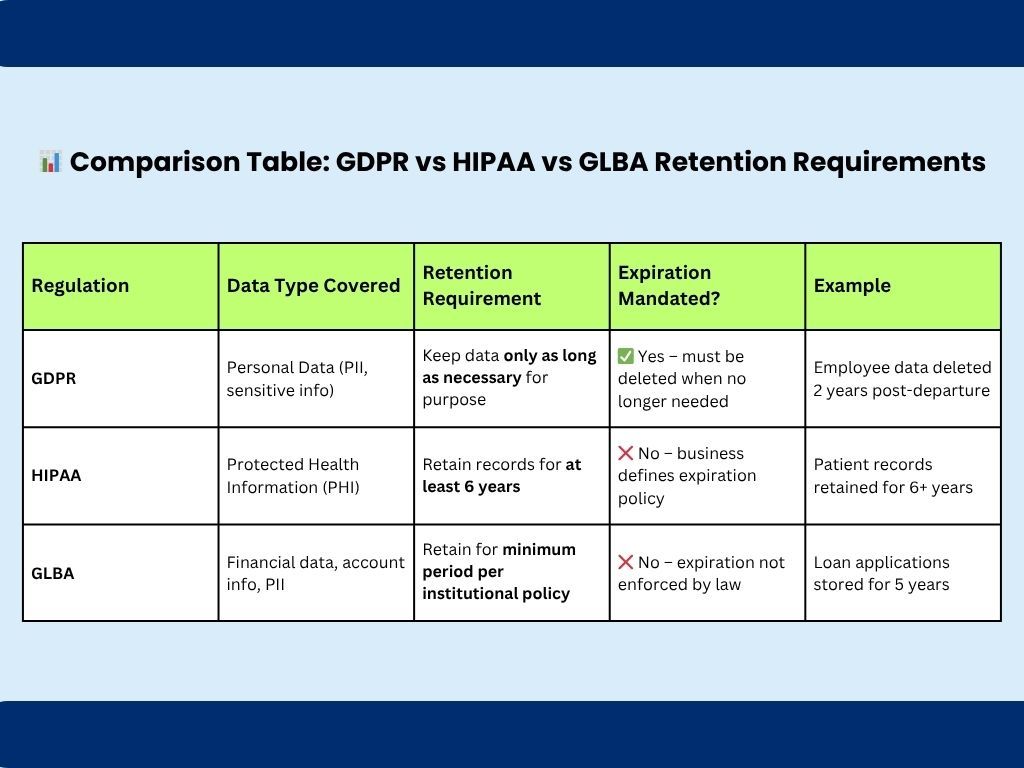
Not all retention requirements are equal, and can be broken into two broad categories. The first states that “Data should only be kept for as long as it is needed. This is how regulations like the GDPR and CCPA describe the requirement. This open, nonspecific statement requires an analysis of the business process and the needed data elements, and is documented in retention schedules. Retention schedules can be determined based on specific functions or documents. For example, copies of client tax forms kept year after year may be listed on a retention schedule as (Finance, Tax Forms, 7 years). This would mean that after publication, this document has to be kept for at least 7 years. Conversely, a time period for archiving or deletion can be triggered based on the last time an interaction or transaction occurred. (i.e., 5 years after the last client meeting.) Either of these methods will allow for an understanding of the business process and monitoring an expiration time period for the data.
The second category more explicitly states a minimum time period for how long to keep data. GLBA, HIPAA, and SoX state that data should be retained for a minimum number of years. For this requirement, tracking when the data was collected is important. However, as these regulations state only a to-be-kept-until date, they do not carry an expiration date requirement. That is left to the business, and many times an organization’s policy will state the regulatory requirement date but never assign an expiration date. In these cases, data can be kept for years after it could be deleted or archived, raising risks of maintaining old or expired data. Including policies for when data should be archived or deleted is a key in meeting retention requirements.
Automated Data Retention and Monitoring with LightBeam
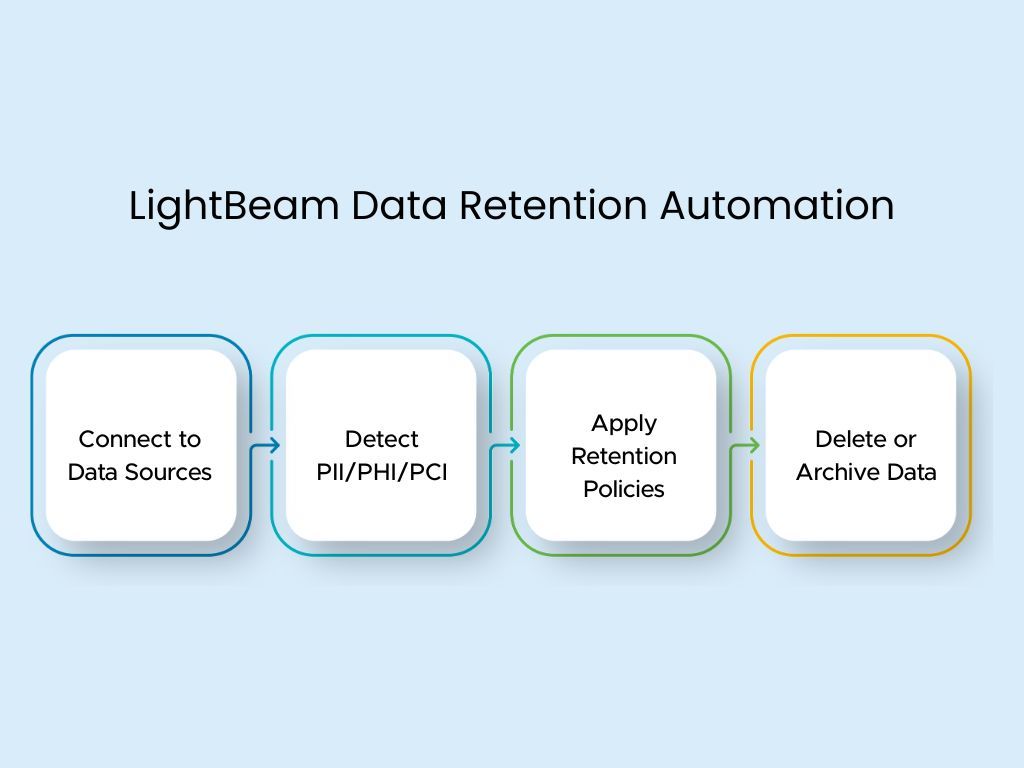
LightBeam users can connect to various data sources and continuously monitor for PII and PHI timestamp data. LightBeam ties together sensitive data cataloging, control, and compliance across structured and unstructured data applications, providing 360-visibility to data. Automated polices monitor data age and provide alerts and actions, ensuring ultimate protection against ransomware or accidental exposures while meeting data privacy obligations efficiently.
🎥 Want to dive deeper into real-world data retention strategies? Watch our on-demand webinar where experts break down how to automate retention policies, reduce risk, and stay audit-ready. 👉
Watch now
Strengthen Data Governance with Minimization and Retention Best Practices
For both minimization and retention, having an automated way to monitor data and document processes is an effective way to meet regulatory requirements and effectively manage the use of personal information. LightBeam supports Minimization and Retention requirements with its unique ability to understand, monitor, and take action on the data in an environment. By creating rule-based policies on data and file types, alerts, and actions to delete or archive data when it has reached the predetermined timeframe, it automatically reduces the risks of maintaining old data that is no longer in use.
❓ Frequently Asked Questions (FAQ)
1. What is data minimization?
Data minimization is the practice of collecting only the personal data necessary for a specific, clearly defined purpose—nothing more. This helps reduce risk, improve data quality, and meet privacy regulations like GDPR and CCPA.
2. What does data retention mean in privacy compliance?
Data retention refers to how long personal data is stored before it’s deleted or archived. Regulations like HIPAA and GLBA often specify a minimum retention period, while GDPR emphasizes not keeping data longer than necessary.
3. Why is expired or stale data a security risk?
Storing outdated data increases the attack surface, drives up storage costs, and exposes organizations to compliance failures and reputational damage in the event of a breach.
4. How does LightBeam help with data minimization and retention?
LightBeam automates the discovery of PII/PHI, links data to identities, and applies rule-based retention policies—automatically archiving or deleting stale data based on business logic and regulatory requirements.
5. Do I need both minimization and retention policies to be compliant?
Yes. Together, these principles ensure you’re only collecting necessary data and disposing of it responsibly—meeting the core expectations of modern privacy laws.
