


Access Audit Automation: The 3 A’s to Strengthen Data Access Control

Bill Schaumann
A key component of managing the collection, use, storage, sharing, and disposal of sensitive information requires an understanding of not only what data exists, where it is stored, but also who has access to it. As data is processed and shared across on-prem and cloud based repositories, managing who has access to it becomes a complex task. The minimum necessary privacy principle dictates that an individual’s access to data should be provisioned to a level that is commensurate with the tasks they are asked to perform. Individuals should only maintain the minimum necessary level of access needed to do their jobs and management needs to track and report on access status.
However, in today’s world where the only constant is change, maintaining access and control over sensitive information can be a difficult task. People come and go, roles change, tasks needed to perform a job change, and leadership changes make consistent access control tracking and reporting a moving target.
Regulatory Requirements
Access to sensitive information is a primary privacy and security risk. Only those individuals who have a legitimate reason to use personal information should have access provisioned. Maintaining correct provisioning to sensitive information is a key mitigating risk control. As such most privacy regulations and security standards require regular reviews of sensitive data access. Although the language may vary, the central message remains the same. Organizations must fully understand and manage access to personal information. Many key privacy and security regulations and standards require monitoring of access to personal information on a regular basis.
Regulations and Frameworks
| GDPR (General Data Protection Regulation)
“Regular access reviews are expected” |
Accountability Framework
“Maintain procedures to restrict access to personal data” |
| SOX (Sarbanes-Oxley Act)
“Regular review of user access to financial systems” |
HIPAA (Health Insurance Portability and Accountability Act)
“Ongoing review of access to health info (ePHI)” |
| GLBA (Gramm-Leach-Bliley Act)
“Mandates access controls and monitoring” |
NIST (800-53 / 800-171)
“Review accounts regularly / Validate access is appropriate” |
| PCI DSS (Payment Card Industry Data Security Standard)
“Access must be reviewed” |
ISO/IEC 27001 (Annex A.9 – Access Control)
“Access rights shall be reviewed at regular intervals” |
Lightbeam Solution
Lightbeam enables users to validate and manage user and group access permissions across data sources like SharePoint, Google Drive, Box, and SMB shares. By automating the enforcement of least-privilege access and flagging anomalies, the system supports regulatory compliance and reduces insider risk. Access reviewers can analyse exactly who has access to files, view a split of internal versus external users, or group members and non-group members and determine if sensitive data is exposed via open or public links. Access review analysis provides an automated view of sensitive data and who has access to by individuals or department level groups.
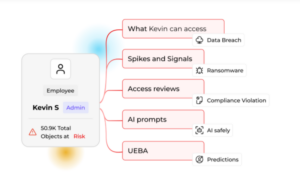
Lightbeam allows administrators to monitor and manage internal and external access to sensitive data by integrating with directory services such as Azure Active Directory or by importing CSV-based employee lists. Through this module, access rules can be configured and enforced, track data access events, and create audit reports by groups and data sources, ensuring compliance with regulatory requirements and security frameworks.
Lightbeam access automation capabilities
- Manage and create individual and group access audit reports
- Revoke unauthorized access
- Prevent unauthorized or stale access to sensitive data
- Enforce Role-Based Access Control (RBAC)
- Ensure compliance with organizational and regulatory requirements
- Provide visibility into access patterns for users, groups, and resources
Conclusion
Managing the ethical and regulatory processing of personal information is a foundational requirement for any responsible organization. Managing the processing of personal information requires organizations to develop complete understandings of their business processes and the data used in business operations. As data needs and use vary across an organization, appropriate access provisioning should be done at the department level. This includes managing what data is being used, where it is stored, and who has access to it.
Ongoing monitoring, review and management of access can be a challenge when many data sources and users are involved. Manual processes for tracking and auditing access in such environments are inherently error-prone, time-consuming, and struggle to keep pace with organizational change and data proliferation. By automating the creation of data access audit information, Lightbeam saves valuable time and creates assurances of accurate and up to date controls over sensitive information are in place.
