


AI Security for Agentic AI
Control what sensitive data, and whose data, AI agents can use based on intended business purpose.

Overview
Beyond Traditional AI Security
Lightbeam combines data identity, Agent Purpose and adaptive enforcement to secure GenAI interactions and autonomous agent actions in real time.
The Lightbeam Advantage
-
Data Identity Context
Know data sensitivity, ownership, identity and business context, including whose data is involved.
-
Purpose-Aware Security
Check whether agent access, data use and actions match business purpose, not just permissions.
-
Adaptive Enforcement
Block harmful actions, restrict access and remediate risks in real time before incidents occur.
-
Enterprise AI Governance
Govern GenAI and autonomous agents across enterprise data, applications, tools and environments.
Traditional AI Security Approaches
-
Limited Data Context
Sees prompts, tool calls or labels, but may lack data ownership, identity and business context.
-
Permission-Based Controls
Checks access rights or rules without assessing whether actions fit business purpose.
-
Reactive Security Controls
Often alerts or blocks interactions, leaving harmful actions and access risks unresolved.
-
Fragmented AI Governance
Secures individual AI systems without consistent controls across enterprise systems.
AI Data Security Built for Agentic AI
Know What Data. Know Whose Data. Enforce Agent Purpose.
Lightbeam discovers, classifies, and labels sensitive data across enterprise environments. Understand what data AI agents can access, distinguish real from synthetic data, and control which information can be safely used in GenAI and autonomous AI workflows.
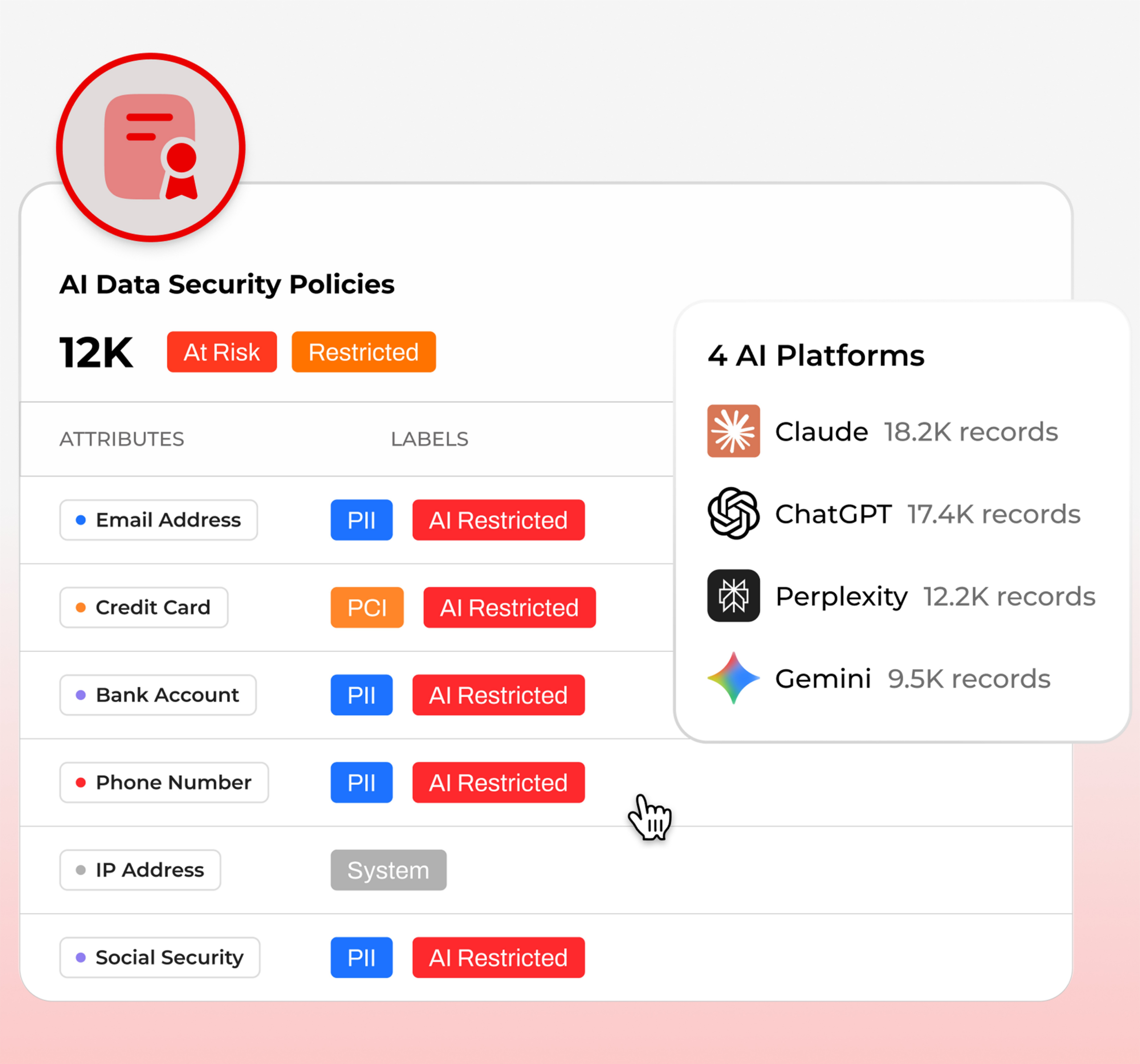
AI Data Security
Control what sensitive data, and whose data, GenAI and autonomous agents can access, use, and expose based on business purpose.
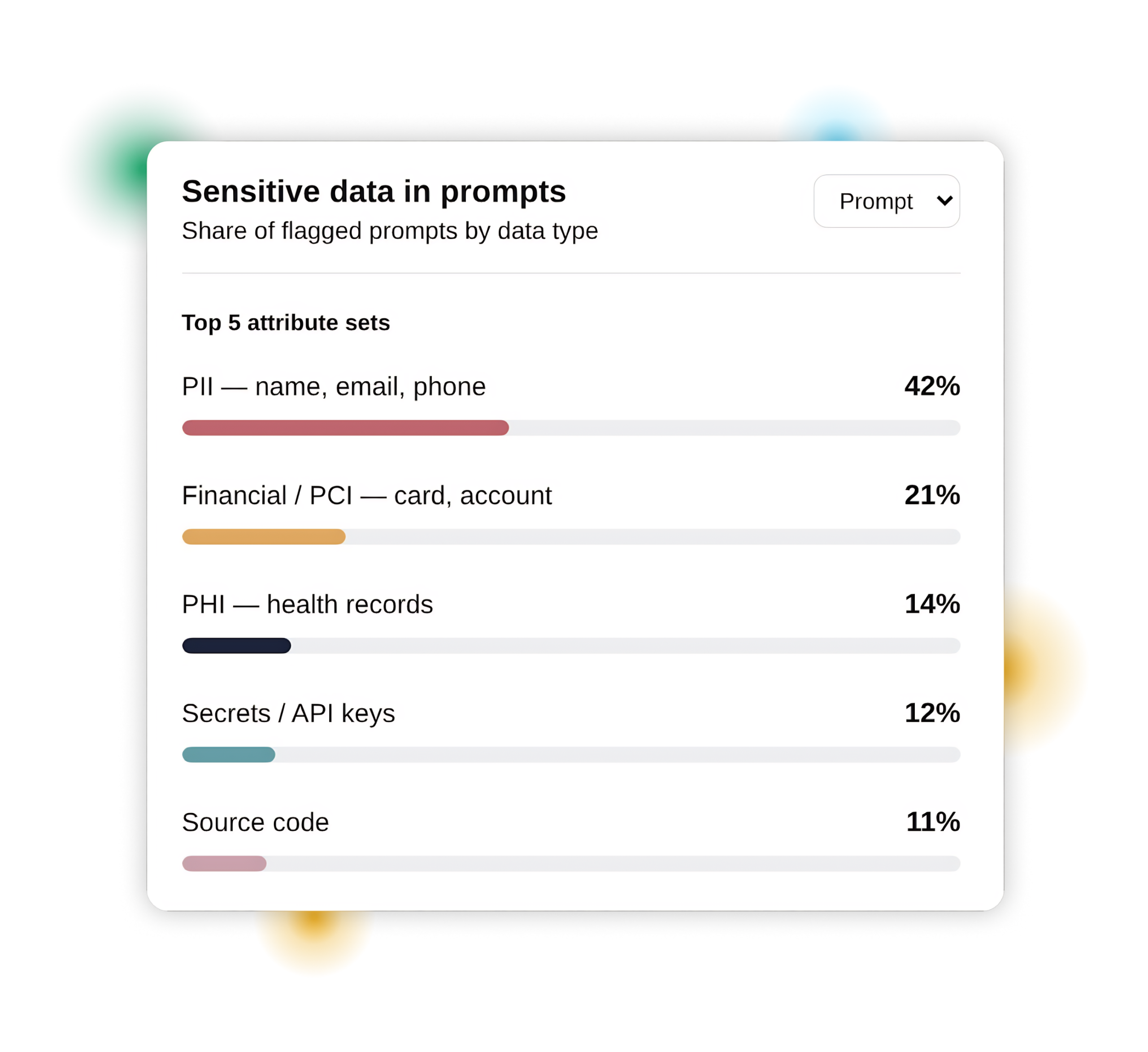
AI Purpose-Based Access Control
Enforce least agency by continuously aligning agent access to the data, applications, APIs, and resources needed for its intended business purpose.

AI Runtime Controls
Monitor GenAI interactions and autonomous agent behavior in real time. Enforce guardrails to prevent sensitive data exposure, unauthorized actions, and business harm.

Business Outcomes That Help Enterprises Scale AI Agents Safely
Reduce AI Data Exposure
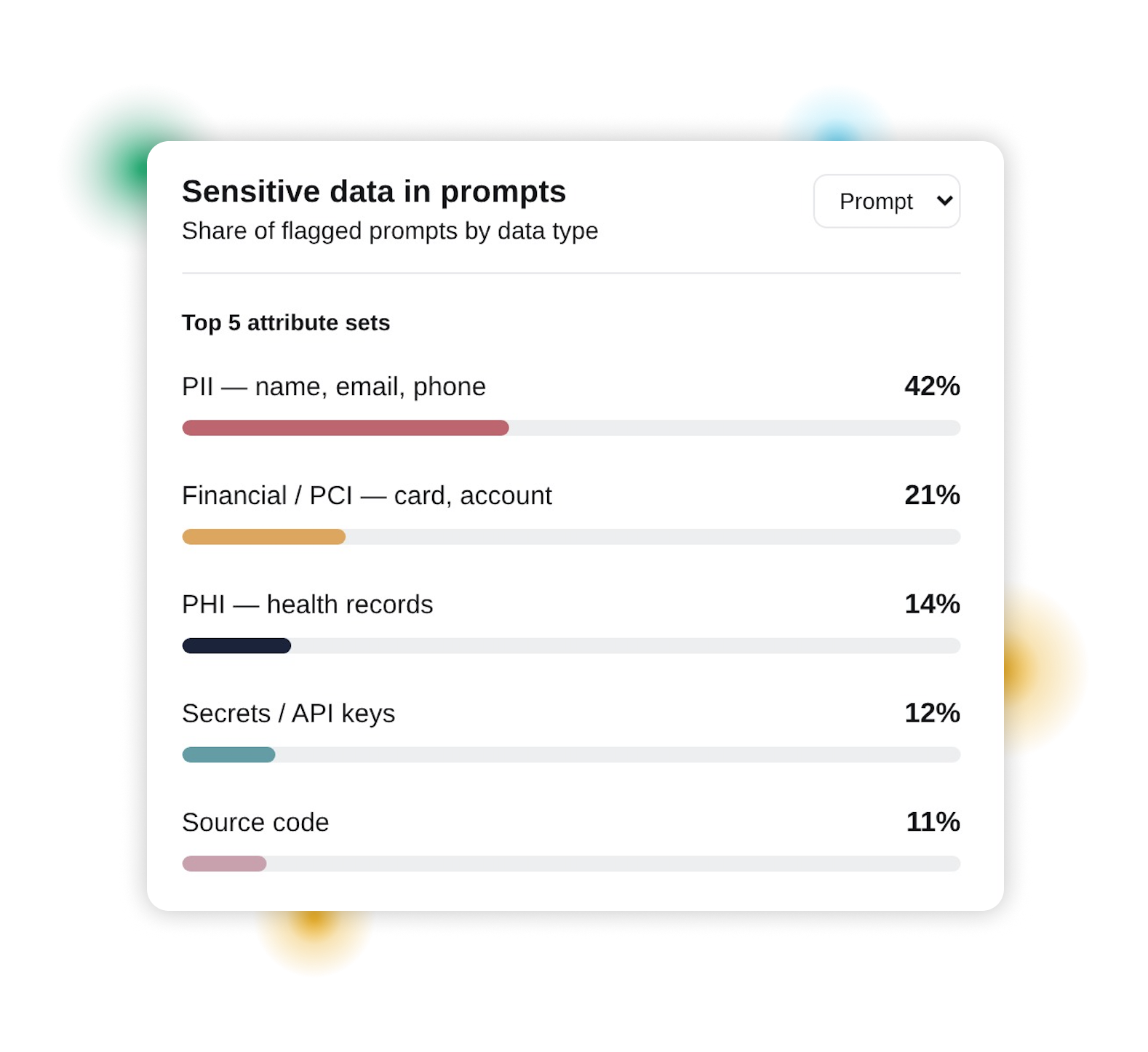
Control what sensitive data can be uploaded, retrieved, attached, or exposed through GenAI tools, copilots, and agents.
Learn MoreControl Shadow AI Risk
Detect and block unauthorized AI use before sensitive data leaves company control.
Learn moreKeep Approved AI Aligned to Purpose
Ensure approved AI tools, RAG workflows, copilots, and agents use sensitive data only for their intended business purpose.
Learn MoreCreate AI Policy Audit Evidence
See what was allowed or blocked, which user or agent acted, when it happened, what sensitive data was involved, and why.
Our PlatformPrepare Data for AI Ingestion
Classify, label, and minimize sensitive data so agents use only the data their purpose requires.
AI Security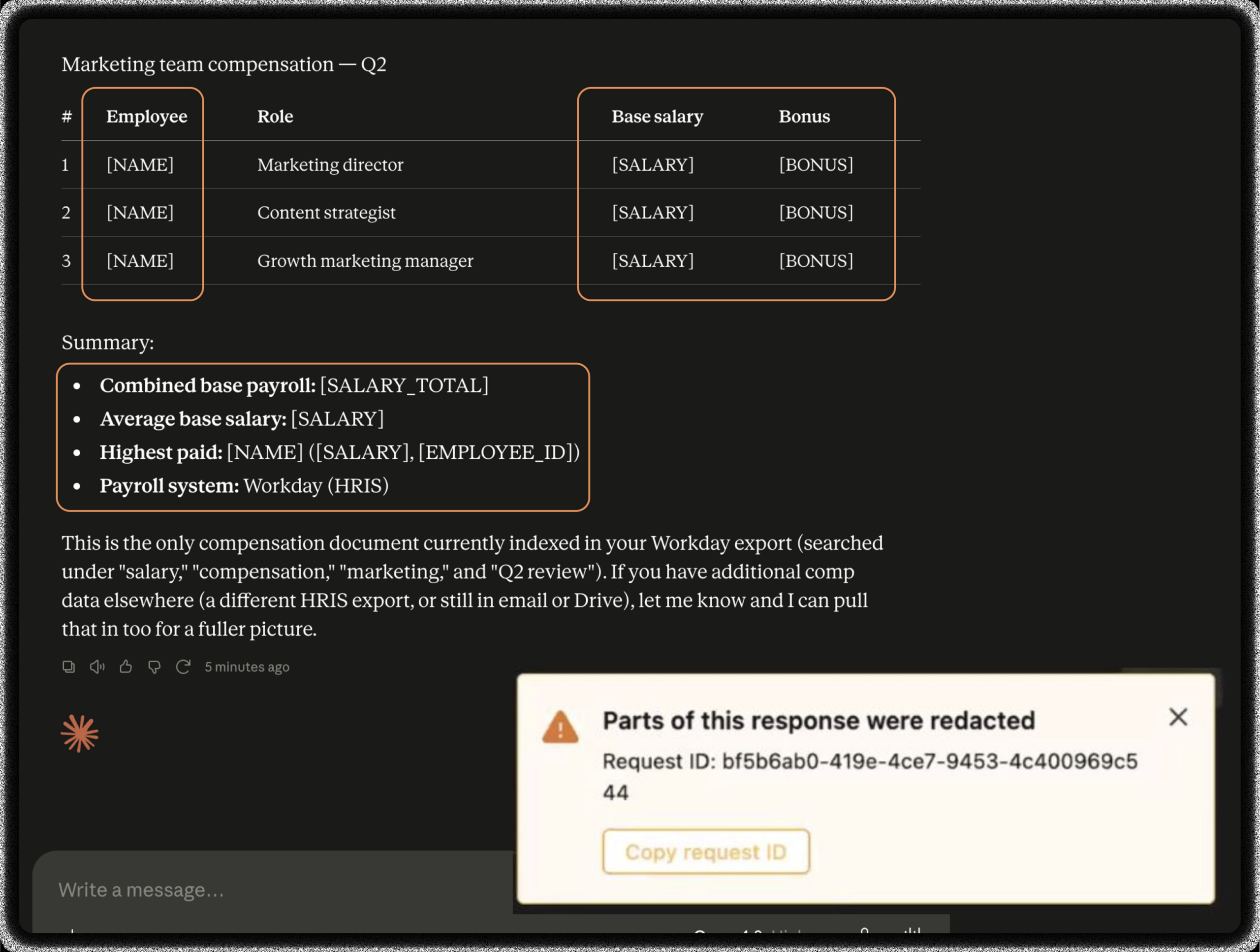

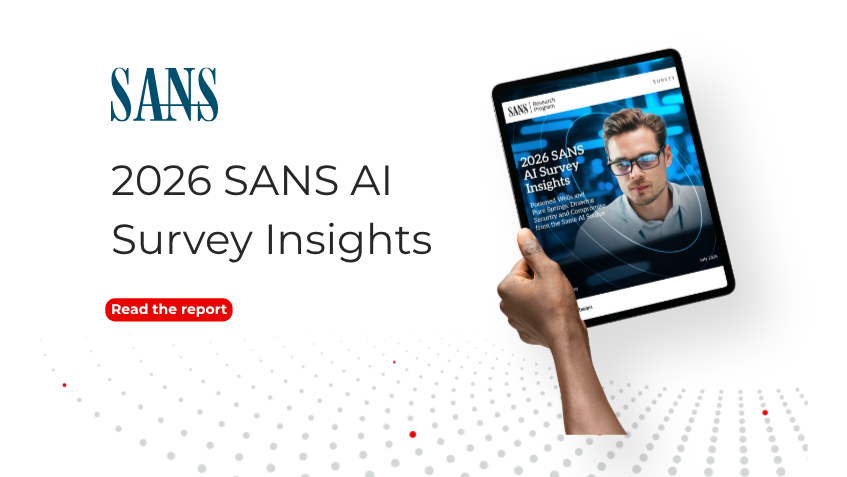
2026 SANS AI Survey Insights
Based on insights from 536 global IT and security professionals and dozens of senior cyber leaders, this report details how organizations are navigating the transition from testing AI to deploying it at scale.


What customers say about DSPM with Lightbeam

“Lightbeam gives us the ability to scan, classify, categorize, and label data so we can ensure that data does not go into areas it does not need to, including AI models.”
FAQs
Frequently Asked Questions
How does Lightbeam prevent AI agents from accessing sensitive data or taking harmful actions?
Lightbeam combines Agent Purpose with its Data Identity Graph to understand what data agents use, which resources they access, and whether their actions align with intended business purpose. Purpose-aware policies and runtime controls can restrict access, block harmful actions, require approval, or trigger remediation before incidents occur.
Explore AI SecurityWhat is least agency, and how is it different from traditional least privilege?
Least privilege limits what an identity can access. Least agency extends that principle to what an AI agent can perceive, decide, and do. Lightbeam continuously aligns agent access, tools, APIs, and actions with intended business purpose, restricting excessive privileges and enforcing boundaries as tasks and conditions change.
Explore AI GovernanceHow does Lightbeam prevent AI agents from going rogue or acting outside their intended purpose?
Lightbeam evaluates agent behavior against its intended business purpose, enterprise policies, and runtime context. Its Agentic AI Security Control Plane combines adaptive policies with enforcement capabilities to block unauthorized actions, restrict privileges, require human approval, or remediate risk. This helps prevent harmful decisions from becoming security incidents.
Explore the Lightbeam PlatformCan Lightbeam secure GenAI tools like ChatGPT and Copilot and prevent Shadow AI data exposure?
Yes. Lightbeam monitors GenAI interactions, including prompts, responses, files, and attachments across ChatGPT, Copilot, Claude, Gemini, and other AI tools. It detects sensitive data exposure, identifies unsanctioned AI use, and applies policies to block, redact, or audit risky interactions while enabling employees to use approved AI securely.
Explore AI Data SecurityBrowse Key Resources


Ready to reduce AI data risk?
See what sensitive data AI can reach, whose data is exposed, and which actions will reduce risk fastest.
